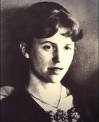
“Sleeveless Summery Dress”: Sylvia Plath’s Bind to Society’s Norms.
Sylvia Plath uses imagery to demonstrate her main themes and ideas. By using these subtle hints, she enables the reader to make connections between her numerous poems. In one of Plath’s most famous poems, “The Bee Meeting”, the main theme is that of of fear, the fear of life and death. In “Lady Lazarus”, the main theme is Plath’s suicide attempts and how people are holding her back and are forcing her to live. In “The Bee Meeting” and “Lady Lazarus”, images of clothing demonstrate society’s bind on individuals by comparing clothes and conformity with nakedness and individuality.
In “The Bee Meeting,” the images of clothing show the poem’s progression. It begins with the speaker, who it is safe to assume is Sylvia Plath herself, is not appropriately dressed for this encounter with the bees. However, she is later forced to conform, she is obliged to assimilate with the villagers. In “Lady Lazarus.” Instead of being undressed to begin with, she is somewhat clothed, but later undressed. The clothes in both of these poems symbolize a bind to society’s standards and a bind to life.
In “The Bee Meeting,” the secretary buttons “the cuffs at [her] wrists” (8), and later, they give her a “fashionable white straw Italian hat / And a black veil…”, they are “making [her] on of them” (21). The villagers are attempting to rid her of her fears by helping her become one of them, emotionally. The image of these clothes maker her become one of them physically. Instead of clothing her, in “Lady Lazarus”, she is instead stripped from her “Jew linen” (9). Instead of the clothes binding her to society’s norms, the clothes she wears in “Lady Lazarus” bind her to her suicide attempts, death, and depression. These were the effects of the pressure of fitting in with society’s norms.
In “The Bee Meeting,” she meets the villagers. She feels left out and unloved because she is not appropriately dressed, she feels naked. She stated that “they are all gloved and covered, why did nobody tell me” (4). This symbolizes not only that she feels like an outsider, but also that she was not warned. She was not warned about all the events that occurred in her life. Plath feels like an outsider in her “sleeveless summery dress [she has] no protection” (3). Nakedness usually represents innocence and individuality in Plath’s poems. However, without the protective beekeepers clothing, instead of being herself and unique, she feels betrayed and unloved. In “Lady Lazarus” her removal of clothing symbolizes her coming back to life, when she states that they “unwrap [her] hand and foot” (23). She is forced to “peel off the napkin” to get rid of her bind, or tie to the want to self-destruct. When she is clothed in “The Bee Meeting”, she admits to being in pain. This pain does not allow her to run, and she further proves society’s strong grasp by stating “I am rooted” (31). The clothes are binding her to the villagers; they are preventing her from running and being herself. She is forced to live in the cruel world, and she could only run if she ran forever, which alludes to her suicide attempts in “Lady Lazarus”.
In conclusion, Sylvia Plath uses these images of clothes to demonstrate her personal bind to life and the people in the society who are forcing her to live, those that want “a piece of [her] hair or [her] clothes” (Lazarus 64). When she is different and a unique individual, she is not accepted because she is not properly dressed. They, the villagers, judge her, feel sorry for her, and try to help her by pressuring her to look like one of them. However, this plan takes an opposite effect, because she is in pain, and she wants to run even more. She is rooted, she is stuck living. The clothes symbolize the bind to life and in effect – the bind to death. They reinforce the theme that both of these events are inevitable.
Saturday, November 1, 2008

Rachel Kim
“Leaves’ Litter”: Sylvia Plath’s Use of Season and Weather Imagery
Love and men: the notorious capturers of Sylvia Plath’s independence. Throughout Plath's poems, she argued that women should be independent from the reigns of men in the male dominated society that she lived in. This theme of feminism presides to be the most prevalent throughout her poems and is enhanced by her use of season and weather imagery. In “Spinster” and “Wintering,” these images show Sylvia Plath’s feministic views by her degradation of men and love.
“Spinster” was written about a woman who realizes the imperfections and backstabbing qualities of her suitor. This poem progresses rapidly from love to independence. The thought that this woman was in love lasted for only three lines in her poem and continued with an epiphany. Plath explains the thoughts of this woman as her own by incorporating images of seasons and weather. This warm weather during the spring season was a time for foolish lovers. “She judged petals in disarray, / The whole season, sloven” (“Spinster” 11-12). When she describes the sentiments of the women in the poem, she is describing what the woman sees in this man that she “loved.” Thus, this woman looked at the man in “disarray” and describes him as “sloven.” Plath’s diction is important in the sense that she deliberately insulting this man therefore enhancing her theme of feminism. Furthermore, she describes the yearning of the woman for winter, a time of precision and a time when a woman has control over her life. “And heart’s frosty discipline / Exact as a snowflake” (“Spinster” 17-18). Although many women want men, the winter disciplines them and allows them to stay in control and direct their own lives. This imagery of seasons displays Plath’s hatred towards men and favor of the ideas of independent women.
“Wintering” was written after the divorce with her husband. Her transition into independence is shown with the weather and season imagery which differentiates the progression of “Wintering to the progression in “Spinster”. Throughout “Wintering,” Plath describes the independence of a woman after the separation of a male figure. Although the progression of the poem differs, the representation that the imagery of seasons and weather holds are very similar. “Wintering in a dark without window” (“Wintering” 6). “No light / but the torch is faint” (14-15). This part of the poem describes the beginning of her independence. This torch she refers to is the only source of guidance that she has into her new life. She lacks the confidence and self esteem without her husband. However, the cold weather of the winter allows her to stay awake and focused. As the poem progresses, the negative tone towards the warm weather appears. “Into which, on warm days, / They carry their dead” (“Wintering” 36-37). “Winter is for women” (42). When she refers to the warm temperature and the dead, the “dead” refers to the powerless women that are manipulated by these men. Hence, she reinforces the significance of winter for women.
The two poems are very similar with their paralleling themes of feminism. However, the use of seasons and weather images are used in different ways because of the differences in progression. In both poems, spring is utilized to show the season of foolish loves. Winter is a season in which women can direct their own lives with precision and control. As a source of taking away the pain Plath felt from her husband and her father, she wrote poetry. Because of the unreliability that she felt with men, she welcomes the precision and harshness of the cold weather of winter rather than warm weathered spring which makes women yearn for love.
Donald Tan
“In her dark wainscoted room”: Sylvia Plath’s Struggle Through Light and Darkness
How better to express a conflict of emotions than to separate them into stark black and white? The confessional poet Sylvia Plath certainly took to heart the poetic contrast of light and dark. Inherent of confessional poetry Plath uses her poetry as a medium to reflect the conflicts and hardships from which she suffers. Using images of light and dark Plath’s poems “Two Sisters of Persephone” and “Black Rook in Rainy Weather” tell two different stories of Plath’s inner turmoil.
Darkness, which is defined as the complete absence of light, provides the perfect means of comparison in Plath’s poems when pitched against light. Her poem “Two Sisters of Persephone” compares the lifestyles of two women. “The first works problems on/ A mathematical machine./ Dry ticks mark time” (Persephone 6-8) while “Bronzed as earth, the second lies,/ Hearing ticks blown gold” (13-14)The reader perceives these two as entirely different because of Plath’s usage of light and dark imagery. “Daylong a duet of shade and light” The shade is the woman who lives alone and dies alone. She is not only darkness by predicament, but also by her descriptions such as “In her dark wainscoted room” (5), “graveward with flesh laid waste” (27) and “worm-husbanded, yet no woman”(28). Darkness in Plath’s sense is not simply blackness, it is the complete lack of good, or love, or life. The light is the woman who is married and bears children. She is also light by her descriptions, such as “Like pollen on bright air”(15), “red silk flare”(17), and “sun’s bride”(21). Thus in Plath’s sense light is represented by a contented married life with children. This interpretation is similar to that of “Black Rook in Rainy Weather”, in which she describes her “fear/ Of total neutrality” (Rook 31-32). In this poem the light and dark is more literal: the dark being “a wet black rook/ … in the rain” and the light “a celestial burning… bestowing largess, honor/One might say love” (17-21) The blackness represents the bleakness of the oppressive boredom Plath is suffering from. Suffering in fact, to such an extent that “a rook/ Ordering its black feathers can so shine/…and grant/ A brief respite from fear/ Of total neutrality” (26-32) This usage of light as a respite from darkness is different from light as a stark opposite of dark in “Two Sisters of Persephone”.
The different usages of light and dark imagery give their respective poems different effects. In “Two Sisters of Persephone” the stark contrast between light and dark coupled with her bitter feminist tone makes the poem an excellent criticism of the role of women in society. It portrays the woman who works towards her education as the one who dies a worm infested virgin, and the woman who has sex and lives in lazy contentment bears a king. However, in “Black Rook in Rainy Weather” the darkness is no longer on equal grounds with the light. The usage of light as a respite from the darkness creates a transition from bleakness to a subtle hope. The poem begins in darkness, and Plath confesses her wish for “some backtalk/ From the mute sky” and ends the poem with her decision to wait, “the long wait for the angel”. In both poems light and dark are used for their contrasting imageries, but to different effects for different purposes.
In conclusion, the images of light and dark are varied within Plath’s poems, and come together loosely under the category of stark contrast. This contrast is used in her two poems “Two Sisters of Persephone” and “Black Rook in Rainy Weather” and they both serve to separate their respective poems into portions of light and dark. But they work to different effects, one to create a harsh social commentary, and the other to outline trying to fight depression by searching for faith.
Audrey yang
Sylvia Plath: As a Jew
Sylvia Plath was a prolific poet, who wrote many famous poems like “Ariel”, “Lady Lazarus”, and “Daddy”. Plath used a wide variety of literary terms to describe her poems, such as caesura, enjambment, and imagery. Plath was born on October 27, 1932 in Boston, Massachusetts and had a very close relationship with her father. He died when she was only eight years old and had left her devastated and depressed. In her poems “Daddy” and “Lady Lazarus”, Plath used war imagery such as Nazi and Jews to represent her life and her relationship with her father.
In the poem “Lady Lazarus”, Plath sees herself as a Jew. “My face featureless, fine Jew linen” (“Lazarus” 8-9). It was believed that during WWII, Jews’ skins were taken to make lampshades. Plath compared herself to the Jews by saying that her skin too, is like a Nazi lampshades. “My skin, bright as a Nazi lampshade” (“Lazarus” 4-5). Unlike the Jews though, Plath chose to die. She had attempted suicide three times and was successful on her third attempt. “Dying is an art, like everything else I do it exceptionally well. I do it so it feels like hell. I do it so it feels real” (“Lazarus” 43-47). Ironically though, the Jews were killed by the doctors, while Plath was saved by the doctors.
In her poem “Daddy”, Plath compares her father to a Nazi. “I have always been scared of you,
Yang 2
with your Luftwaffe, your gobbledygoo. And your neat mustache and your Aryan eye, bright blue” (“Daddy” 40-44). The reasons, why she is comparing her father to a Nazi is because she resent him for leaving her behind in a life where she does not want to live and had tried to commit suicide multiple times to get to him. “I was ten when they buried you. At twenty I tried to die and get back, back, back to you” (“Daddy” 57-59). She also compared herself to a Jew. “An engine, an engine, chuffing me off like a Jew. I began to talk like a Jew. I think I may well be a Jew” (“Daddy” 32 and 33-34).The reason why she compared herself to the Jews is because like the Nazi killing and hurting the Jews, her daddy was hurting her.
Even though Plath had compared her father to a Jew, she still love him, because they have had a good relationship. “Every woman adores a Fascist, the boot in the face, the brute brute heart of a brute like you” (“Daddy” 48-50). She missed him so much that she even tried to find a replacement for him with her husband. “I made a model of you, a man in black with a Meinkampf look and a love of the rack and screw. And I said I do, I do.” (“Daddy” 64-67). But just like her father, he had caused her pain and this may had been the reason why she decided to let go of her father. “So daddy, I’m finally through. The vampire who said he was you and drank my blood for a year, seven years if you want to know. Daddy, you can lie back now.” (“Daddy” 65 and 72-75).
In both poems Plath used war imagery to represent herself as a Jews. “My skin, bright as a Nazi lampshade”(“Lazarus” 4-5) and “I began to talk like a Jew. I think I may well be a Jew” (“Daddy” 34-35). She also talks about her suicidal attempt in both poems. “The first time it
Yang 3
happened I was ten. The second time I meant to last it out and not come back at all” (“Lazarus” 35and 37-38). “At twenty I tried to die and get back, back, back to you” (“Daddy” 58-59). The difference between Plath’s used of war imagery in “Daddy” and “Lady Lazarus” is that in “Daddy” it was used to represent the pain that she goes through after her father’s death and trying to replace him with her husband. “Lady Lazarus” on the other hand, was used to represent her life and suicidal attempt only.
By just comparing and contrasting these two poems, using war imagery, you can tell that Plath, although is a prolific poet did not live a happy life. The way that she used her cruel and unusual words to explain her life was one of the reasons why her poems are so famous. She also used her poems to explain herself and her life to the world, to an extent that makes it easier for us to understand and questioned her death, making her one of the most famous poets to receive fame after death.
793
Edward Lee
The Birds and the Bees: Imagery’s Role in Sylvia Plath’s Poetry
In determining a poem’s meaning, what stylistic element carries the most weight? Concerning Sylvia Plath’s works, imagery produces the most profound effect on the reader. Plath uses numerous types of imagery and symbolism to paint a picture of fear and oppression. In addition, Plath uses herself as a generalization for all women. Specifically, in her poems “Black Rook in Rainy Weather” and “The Bee Meeting,” images of animals and their surrounding environment reveal the relationship between women and men by juxtaposing their roles in their respective lives.
“Black Rook” and “Meeting” are primarily concerned with the effects of a man’s role in a woman’s life. The rook is constantly “arranging and rearranging its feathers” (“Rook” 3), suggesting a narcissistic figure solely concerned with physical stature. Plath intentionally cites a particularly fastidious task of birds to draw parallels to men. The black rook is successful, causing the woman to “haul my eyelids up and grant a brief respite from fear” (“Rook” 29-31). This fleeting rescue symbolizes the scourge of promiscuity; men tend to have varying desires as time passes. Finally, this particular work ends in frustration, as “the wait’s begun again” (“Rook” 39) for the “angel” (“Rook” 40), or loyal man, to reappear. “Black Rook” sympathizes with women who struggle with finding the ideal partner.
Furthermore, Plath makes several references to this same idea in “The Bee Meeting.” The focal point of this poem is the image of the bee. Being yellow and black, the insects are themselves a representation of the quintessence of Plath’s view on men: they are all flip-floppers and two-colored in personality. Bees are also easily distracted by simple objects, such as colors. Parallels drawn, Plath makes indirect comparisons between bees and men. The bees represent the swarming masses of the world. Male figures are seen alongside these crowds, specifically the rector, the sexton, and the “man in black” (“Meeting” 2, 11), implying an association between men and a suffocating population. The hunted woman narrating the poem is Plath herself, intelligent and set apart from the usual status quo. As such, she is forced to put on a charming façade, despite her mixed emotions inside: “They will not smell my fear, my fear, my fear” (“Meeting” 10). If she were to make herself obvious, the men, as bees, would swarm upon her and prevent her from ever escaping the stereotype of a woman. This is further implied later in the poem, as Plath says, “If I stand very still, they will think I am cow-parsley” (“Meeting” 39). Cow-parsley, a plant of no interest to bees, would provide a sanctuary from the stings and sharp tongues of men.
Although “Black Rook” and “Meeting” discuss men’s societal implications on women, the two poems also describe men’s actions against women. Generally, the subject of women’s importance in a man’s life is met with disdain in Plath’s works. In addition to the direct rook imagery, the animal’s surroundings contribute to Plath’s argument. “Miracles occur/If you care to call those spasmodic tricks of radiance miracles” (“Rook” 36-39). Women, on the whole, do not have significance in a man’s life; consequently, men are willing to abandon these unimportant “objects” for others. The continuously rainy, “desultory weather” (“Rook” 8) implies Plath’s disappointment with men’s treatment of women and her hope of a miraculous new day that will have this custom done with.
“The Bee Meeting” portrays a modern-day equivalent of a witch hunt; men are chasing Sylvia Plath for her apparent failure to stick to the status quo. “I have no protection, and they are all gloved and covered” (“Meeting” 3-4). With nothing to fear, the men are free to do their bidding unto women who they deem as out of place. As a result, women are forced to become “milkweed silk” so that “the bees will not notice” (“Meeting” 9). Plath utilizes the image of the queen bee to represent herself; she is in hiding and must avoid the villagers. The symbolism and imagery in “The Bee Meeting” ultimately imply a relentless and desperate hunt that will eventually end in death.
It is clear that imagery has much to contribute to poetry. As a whole, Plath’s works contain much more than simply one type of symbolic idea. Thematically, oppression and fear are found throughout her collection of poems, aided by numerous images from different disciplines. Although Sylvia Plath wrote to further human understanding, she and her poetry are inextricably linked, making parallels the entire way.
Word Count: 742
Azkaa Zaman
“Herr Doktor, Herr Enemy”; Plath and Her Use of War Imagery
Sylvia Plath has been known to use many different images and allusions in her poems. These images and allusions relate to specific events that have occurred in Plath’s life and have affected her in a negative way. One of the most prevalent images used throughout her poetry is war imagery. In “Daddy and Lady Lazarus”, images of war demonstrate Plath’s pain in her marriage, coping with her father’s death, and her feelings of societal rejection.
Plath directly represents the struggles she had in her marriage with Ted Hughes through war imagery. This can be seen in her poem “Daddy”, which is her general perception of her father and his death. This also relates to her marriage when she says “I made a model of you/ A man in black with a Meinkampf look” (“Daddy” 64-65). “Meinkampf” directly refers to Adolf Hitler and the book that her wrote in prison before he became dictator of Germany. “A man in black” would refer to a groom, who in this case was Ted Hughes, and the black would be all the torturous crimes committed in WWII. The fact that Plath was trying to replace her father shows that she did want another man in her life to love her, but in this case, he turned out to be terrible. Another direct attack she makes toward marriage is seen in “Lady Lazarus”, when she says “A cake of soap, /A wedding ring, / A gold filling” (“Lazarus” 79-81). These images relate back to the ill treatment of the Jews in the Holocaust. During this time, they were experimented on and sometimes their skin was used to make soap and candles as well as fertilizer. Anything of value was stripped from them, like their golden wedding rings and teeth, and it was melted down and used where gold was needed. This criticizes marriage by comparing this bond as having the same value as to those items taken from the Jews and thrown by the Nazis. Direct comparisons to war help the reader create a sense of the kind of struggle Plath went through in her marriage.
Another way theses war images are used are through portraying the pain that Plath felt with the death if her father. It is clear that was very upset with his leaving her alone and she is also angry that he did not seek the help for his diabetes. He knew he had it, but he was in denial and later on, he needed surgery. The surgery left him with gangrene in his foot, which eventually caused him to die. Her anger is seen in “Daddy” when she says “I thought every German was you…chuffing me off like a Jew. / A Jew to Dachua, Auschwitz, Belson. / I began to talk like a Jew. / I think I may well be a Jew” (“Daddy” 29-35). This shows how she feels her father has treated her by abandoning her, and she blames him for not preventing his death when he could have. Plath also compares her father to a Nazi because of the severity of what he did to her by dying, and so she is the Jew being mistreated. More of her anger is seen in “Lady Lazarus” when she says “Ash. Ash--- / You poke and stir / Flesh, bone, there is nothing there---” (“Lazarus” 76-78). This statement makes a comparison to the remains of the Jews after the war, and what little significance they had to the Germans. In this particular part of the poem, she is saying that her father left her as if she was unimportant, just like the Jews in WWII. From these images, Plath’s true feelings about her father’s death are revealed.
The final use of these images is directly reflecting on Plath’s life and her feeling as an outcast in society. She lead a very difficult life which she tried to end at least twice, and it is clear that she felt different from everyone else because of all the criticisms she makes. In “Daddy”, Plath represents her feelings of trouble when she states “Every woman adores a fascist, / the boot in the face, / the brute-heart of a brute like you” (“Daddy” 48-50). She seems to feel that everything in her life has gone wrong, like women who adore fascist leaders without really knowing what they stand for. The fascist is a direct war image, and it shows her feeling of solidarity. The war images also indicate her feelings about her own attempted suicides and how she did not want to be saved. Plath says “So, so Herr Docktor, / So, Herr enemy”…Herr God, Herr Lucifer/ Beware. / Beware” (“Lazarus” 68-84). The “Herr” part of this stanza is a German word, and that represents WWII. She says that her savior (the doctors) are her enemies because she does not want to live, yet they keep forcing her back to life and into all this unwanted pain. This also ties in to the basic theme of “Lady Lazarus”, which is that Lazarus might not actually have wanted Jesus to save him. This is the message Plath portrays, that the times she attempted suicide, she almost died and she did not want to be brought back to life either, and that enrages her.
Imagery usage in Plath’s poems is abundant, and without it, she might not be known and appreciated as well as she is today. War images specifically relate events in her life, like her marriage, the death of father, and her suicide attempts. The comparisons made to war, no matter how harsh or exaggerated they may seem, do have an important purpose. They place an emphasis on Plath’s feelings and show the reader that these important events are like the important wars that occurred in history, leaving a large impact on her life forever.
Subscribe to:
Posts (Atom)